Read the passage and notice the bold phrases. Then answer the discovery questions and study the grammar guide before you begin the interactive practice.
Part 1: Reading — A New Place to Explore
Last month, I moved to a new neighborhood. At first, I didn’t know anyone, but I soon discovered some interesting places.
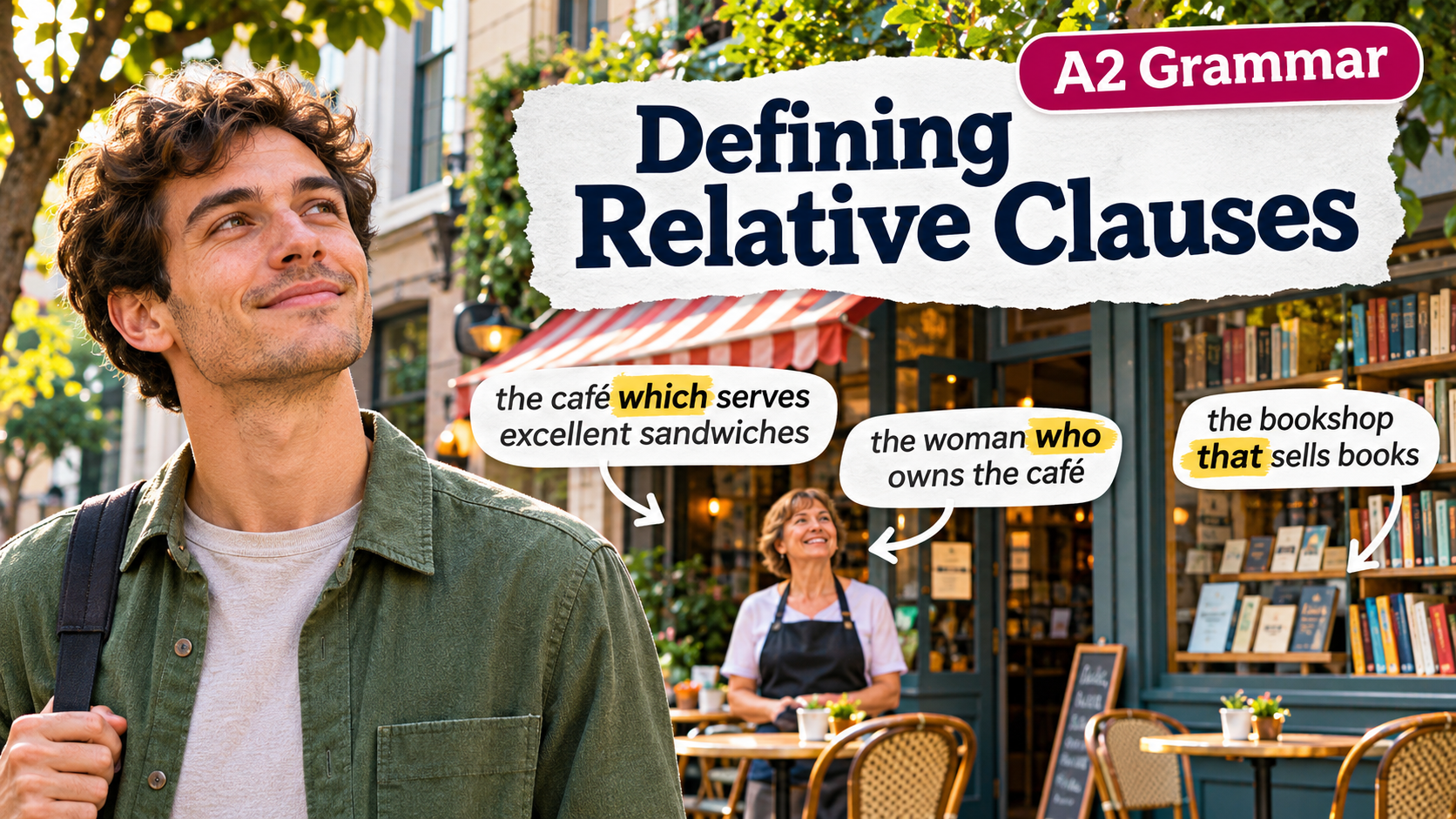
There is a café which serves excellent sandwiches near my apartment. I often go there after work. The woman who owns the café is very friendly. She knows all the people who live in the neighborhood.
There is also a bookshop that sells second-hand books. It’s a small shop where you can find books in different languages. Last weekend, I met a student who studies English at the local university. She recommended a park which has a beautiful lake.
Now I have several favorite places and a few new friends. I’m really enjoying my new neighborhood!
Part 2: Discover the Grammar
Look at the bold phrases in the reading. Think about these questions before you read the explanation.
- Which bold phrases describe people?
- Which bold phrases describe things?
- Which bold phrase describes a place?
- What information do these phrases give us about the nouns before them?
Check what you should notice
People: who owns the café, who live in the neighborhood, and who studies English at the local university.
Things: which serves excellent sandwiches, that sells second-hand books, and which has a beautiful lake.
Place: where you can find books in different languages.
These phrases give us more information about the noun before them. They help us understand exactly which person, thing, or place the speaker means.
Part 3: Understand the Grammar
A defining relative clause gives important information about a person, thing, or place. It tells us exactly which person, thing, or place we mean.
| Relative word | Use it for | Example |
|---|---|---|
| who | People | The woman who owns the café |
| which | Things | A park which has a lake |
| that | People or things | A shop that sells books |
| where | Places | A café where people meet |
Remember
- The relative clause comes immediately after the noun it describes.
- We do not use commas in defining relative clauses.
- The information is important because it helps identify the person, thing, or place we mean.
- Use where for a place when the clause tells us what happens there: a shop where you can buy books.
See more examples
who — a person: a student who studies English
which / that — a thing: a phone which takes good photos
where — a place: a park where children play
Ready to practice? Continue to the exercise below and answer all ten questions.