
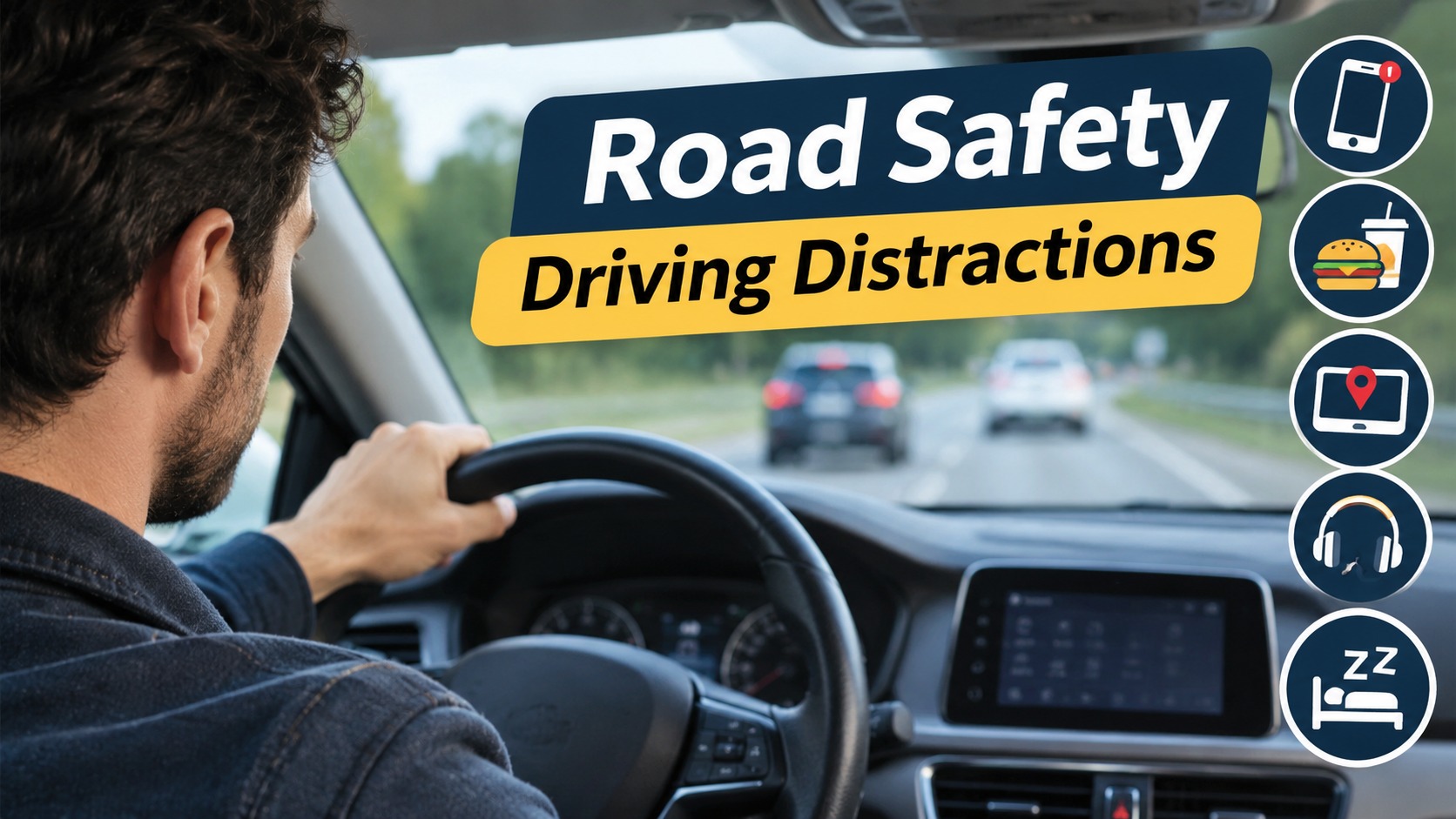
Listen to a radio interview about eight common driving distractions. Tom Reed explains why emotions, reaching for objects, outside events and everyday activities can take drivers’ attention away from the road. Complete the listening activities and identify the key risks.
Before listening
Look at the featured image on this page. What kinds of things can distract drivers? Which do you think are the most dangerous?
This is a warm-up. There are no right or wrong answers.
Listen to the interview and complete the activities in the interactive exercise below. You can listen again before checking your answers.
Read the transcript
Transcript
[Host] Hello and welcome to On the Move. Today we’re discussing road safety and the things that can distract drivers. Tom Reed, a transport journalist, is here to tell us about some recent research. Welcome, Tom.
[Tom] Thanks. It’s great to be here.
[Host] So, what did the researchers discover? What is the biggest danger for drivers?
[Tom] The most dangerous thing is driving when you’re upset, angry or very stressed. People often think they can drive normally when they’re in a bad mood, but the research suggests they’re much more likely to have an accident. Strong emotions can make it difficult to concentrate, and drivers may take risks without thinking carefully.
[Host] That’s interesting. So if you’ve had a terrible day, it might be better to wait before driving. What comes next?
[Tom] Number two is reaching for something inside the car. It could be your phone, a bottle of water, or something in your bag. Even if you only look away for a moment, you’re not watching the road. Drivers who do this are much more likely to have an accident.
[Host] And what’s the third biggest risk?
[Tom] Looking at something outside the car that isn’t part of the traffic. For example, drivers sometimes slow down to look at a road accident or an unusual event. But they’re paying attention to the wrong thing, and they may not notice a car stopping in front of them.
[Host] So curiosity can be dangerous! What else should drivers avoid?
[Tom] The fourth risk is using a navigation system while driving. You should enter your destination before you start your journey. If you need to change the route, find a safe place to stop first.
[Host] And number five?
[Tom] Driving when you’re tired. Many people do it, especially after a long day at work or during a long journey. But tired drivers react more slowly, and in serious cases they can even fall asleep at the wheel.
[Host] That sounds really dangerous. What about the car’s radio?
[Tom] That’s number six. Changing the music or adjusting the sound system can take your attention away from the road. It may seem like a small thing, but even a few seconds can be enough to cause a problem.
[Host] And what are the final two distractions?
[Tom] Number seven is eating or drinking while driving. You may need to take one hand off the steering wheel, and food can also make a mess or distract you.
[Tom] Number eight is talking to a passenger. Conversation is usually fine, but it can become distracting if the driver turns to look at the person or gets involved in an emotional discussion.
[Host] So, what’s the main message from the research?
[Tom] The important thing is to remember that distractions aren’t always obvious. Some drivers know they shouldn’t use a phone, but they don’t think about reaching for something or driving when they’re upset. Before you set off, make sure you’re ready, put things where you can reach them safely, and keep your attention on the road.
[Host] Excellent advice. Thanks for joining us, Tom.
[Tom] Thank you.