
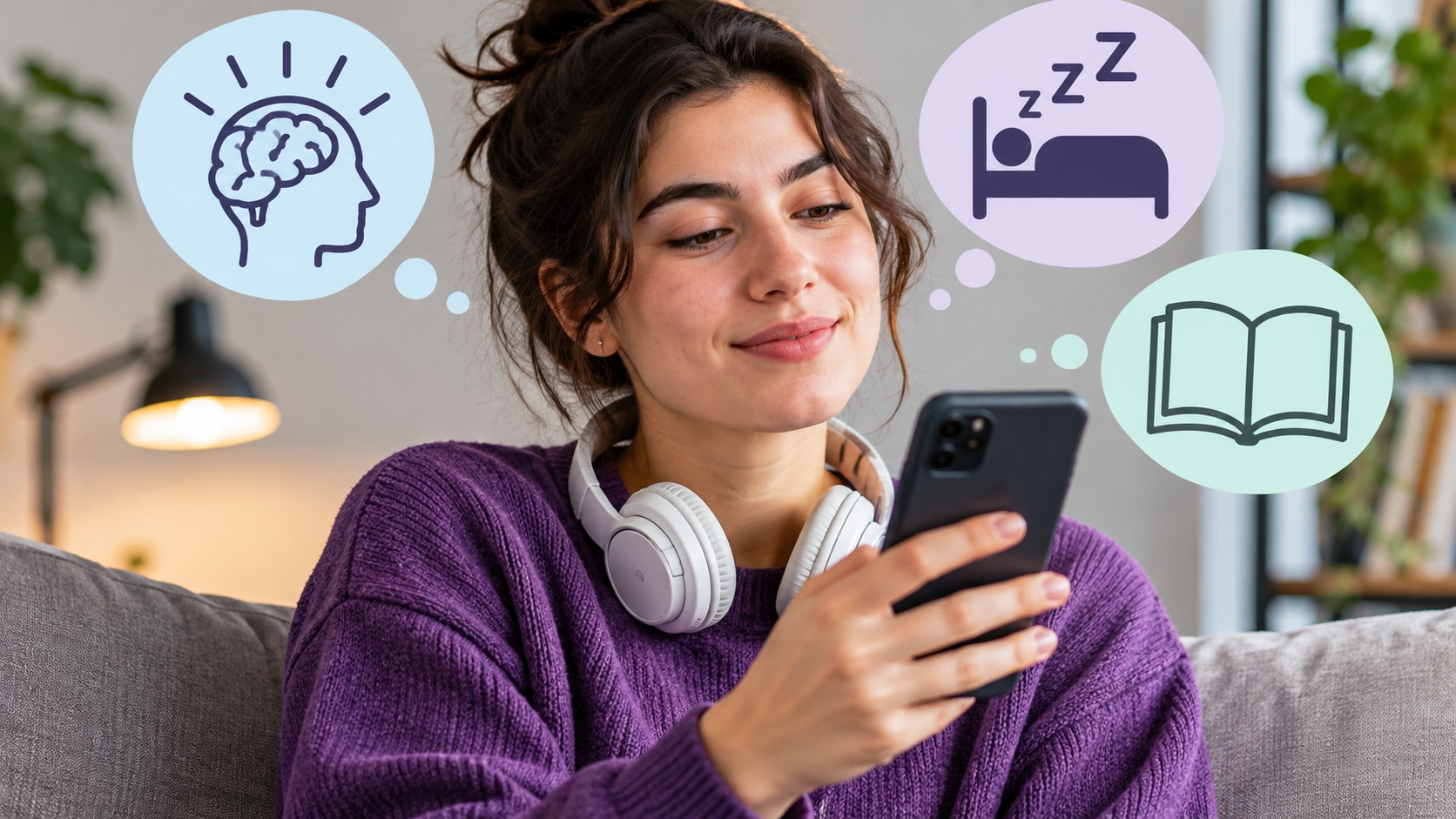
Listen to a radio interview about how smartphone use can affect concentration, sleep and daily habits. Hear practical advice from Dr. Lee, then answer the comprehension questions in the interactive activity. You can listen again before checking your answers.
Read the transcript
Transcript
[Radio Host] Welcome to Science for Everyday Life. Today, we’re asking: what does your phone do to your brain? Many people use smartphones every day, but can they affect our attention and sleep? To learn more, we’re talking with Dr. Lee.
[Dr. Lee] Thanks for inviting me. Smartphones are useful tools, but the way we use them can affect our daily habits.
[Radio Host] Let’s start with concentration. Why is it difficult to focus when our phones are nearby?
[Dr. Lee] Our brains notice new information. When a phone makes a sound or shows a message, we often want to check it. Even a short interruption can make it harder to return to a task. After looking at a message, people may need some time to focus again.
[Radio Host] What can people do to concentrate better?
[Dr. Lee] First, turn off notifications that are not important. You can also put your phone in your bag or in another room while you study or work. These small changes can reduce interruptions.
[Radio Host] What about using a phone at night? Can it affect sleep?
[Dr. Lee] Using a phone late at night can make it harder to relax and get ready for sleep. The light from screens may also affect the body’s sleep signals, especially when we use them close to bedtime. It’s a good idea to stop using your phone before bed and keep it away from your bed.
[Radio Host] Some people feel uncomfortable when they are not checking their phones. Is that normal?
[Dr. Lee] Yes, it can be. We are used to getting information and entertainment quickly. When we put our phones away, we may feel bored at first. But screen-free time gives us a chance to think, notice what is around us, and enjoy other activities.
[Radio Host] What are some good activities to try?
[Dr. Lee] You could read a book, go for a walk, cook something, or talk with a friend or family member. The important thing is to choose an activity you enjoy.
[Radio Host] So, does everyone need to stop using smartphones?
[Dr. Lee] No. Smartphones are useful, and we don’t need to give them up. The goal is to notice our habits and make small changes. For example, we can have meals without phones, take short breaks from screens, and avoid checking messages while doing important tasks.
[Radio Host] That’s helpful advice. We can use technology and still make time for sleep, concentration, and real-life activities. Dr. Lee, thank you for joining us.
[Dr. Lee] Thank you.
[Radio Host] And thanks to everyone listening to Science for Everyday Life. Try one small change today and see how it works for you. Goodbye!